
Independent signals across testing pools, developer logs, and benchmarking platforms suggest Google may be preparing a joint release for Gemini 4 Flash and Carbon. While Google has not issued an official announcement regarding its upcoming generation of models, activity over recent days indicates shifting priorities behind the scenes. Developers and tech enthusiasts tracking model deployments observed an unusual series of events across public LLM benchmark arenas, backend repositories, and quiet A/B testing groups. These observations outline how the unannounced models perform, how an internal routing system connects them, and why the sudden withdrawal of active test checkpoints could signal an imminent launch.
Clues across code and benchmarks
The first clue comes from reports circulating among early testers, who noted a responsive model appearing intermittently in select user pools. Many observers speculate this represents a grey-market deployment of Gemini 4 Flash. Early user feedback points to clear latency improvements paired with reasoning scores that rival enterprise-grade builds like Gemini 4 Argon. Flash models usually trade reasoning depth for raw generation speed, but tester observations suggest this build narrows that divide substantially.
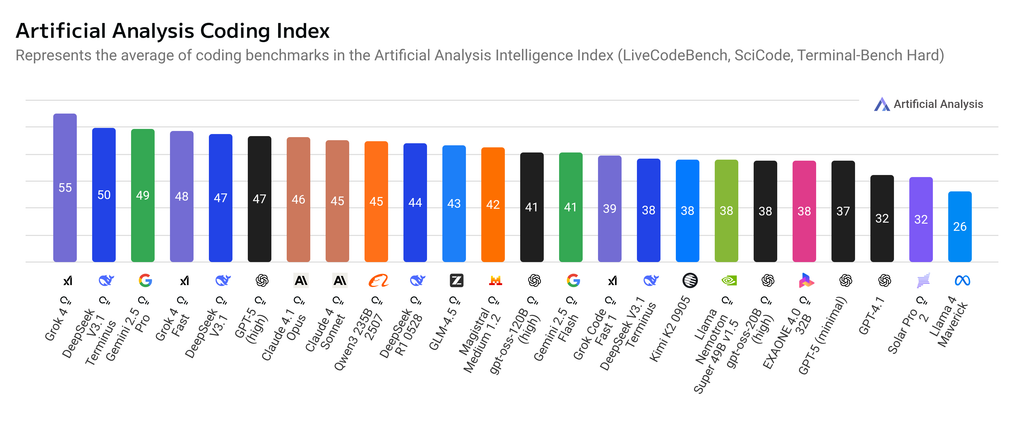
Architectural context emerged shortly after from internal backend code. Developers discovered a reference to “gemini-3.8-flash-router” located inside Antigravity files. In large AI infrastructure, dynamic traffic distribution is essential for balancing compute loads across server fleets. The router label points to an automated system designed to evaluate prompt complexity, sending lighter queries to fast tiers while directing harder tasks toward resource-intensive frontier models.
A third signal surfaced on Chatbot Arena, where an unannounced model codenamed Carbon briefly rose through the ranks. In community evaluations, Carbon demonstrated strong output in spatial reasoning, code generation, and complex synthesis. Just as evaluators started gathering systematic benchmark results, outputs from the checkpoint stopped entirely. During previous release cycles, the abrupt removal of an arena model often preceded a formal release or an updated checkpointing phase.
Model tiering and release preparation
Google has structured its recent model families around a balance between operational efficiency and raw compute capacity. Mapping these rumors together indicates a potential paired release. In this arrangement, Carbon would act as the heavy-duty engine for complex reasoning, while Gemini 4 Flash serves as the scalable, low-latency option for high-volume tasks, connected by an intelligent routing backend.
When experimental checkpoints vanish overnight after days of active testing, model developers usually follow one of two paths. Teams may have concluded initial benchmark runs, turning to human feedback to refine safety protocols and context handling before launch. In other cases, test checkpoints are taken offline so engineers can deploy unified release candidates across public API endpoints and Google AI Studio staging environments.
Because routing code references, Chatbot Arena appearances, and grey testing surfaced within the same window, the quiet period suggests final rollout preparations are underway. Google has not officially confirmed release dates or technical specifications for either model. Nevertheless, the convergence of infrastructure updates, user testing, and withdrawn evaluation checkpoints indicates that a major deployment may be approaching.
Editorial Ethics & Disclosure: Our evaluations, reviews, and reporting are conducted independently. Learn more about our editorial ethics and affiliate disclosures.

About Robert Haba
Robert Haba covers technology, hardware architectures, and consumer platforms for Gadgetts.
Related Coverage
 AI
OpenAI announces GPT-6 Cyber for security research
OpenAI announced GPT-6 Cyber, an AI model that found 81 high-severity Firefox flaws and built working exploits for 948 Linux kernel vulnerabilities.
 AI
Google adds free textbooks to Gemini Notebook for students
Google added free textbooks to Gemini Notebook from OpenStax and S Chand, letting students generate flashcards, practice quizzes, and citations.
 AI
Why AI agents need structured investigation methods and human oversight
AI agents save engineering time only when paired with structured investigation skills, human approval workflows, and clear verification steps.