

Infinity Ward has released Call of Duty: Modern Warfare 4, priced at $70 on PlayStation 5, Xbox Series X/S, Nintendo Switch 2, and PC (via Steam, Battle.net, and Xbox on PC). The release follows several disappointing franchise installments that lacked creativity and authenticity. This review assesses whether the new title redeems the series after the letdowns of Modern Warfare 3 and Black Ops 7. The game delivers an approximately eight-hour campaign, grounded competitive multiplayer, and a standout extraction experience in DMZ mode. While demanding PC hardware performance, inconsistent hit registration, and the inclusion of single-use DMZ upgrades in the $100 Vault Edition draw criticism, the core experience represents a strong return for the studio.
Being a Call of Duty fan in recent years felt like being trapped in a toxic relationship, with most titles disappointing due to a lack of creativity and authenticity. When Activision announced the reboot of the Modern Warfare series in 2019, anticipation was high. The first two reboot entries ranked among the best titles the franchise had released in a long while. However, Modern Warfare 3 dashed that hope, and Black Ops 7 proved to be another major misstep.
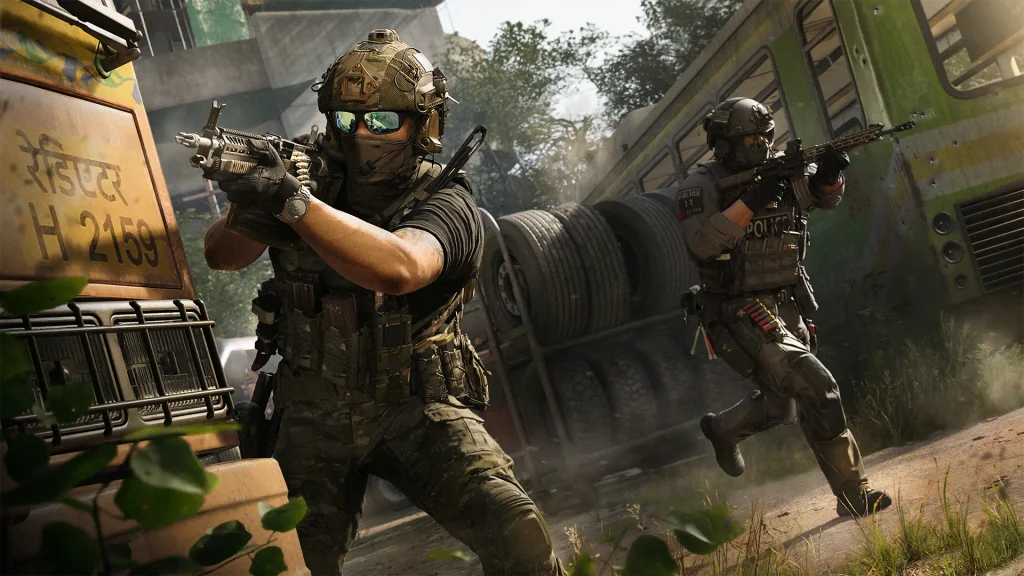
Despite dreading the worst, the reviewer purchased Modern Warfare 4 for $70 out of curiosity, finding that the investment paid off. The campaign offers a fresh experience with great visuals, a respectable storyline, and zero filler missions. The multiplayer suite remains solid with new modes like Collateral, Kill Block, and Inflation. The real highlight is DMZ, which offers skill trees, bounty boards, and a solid variety of missions.
Campaign
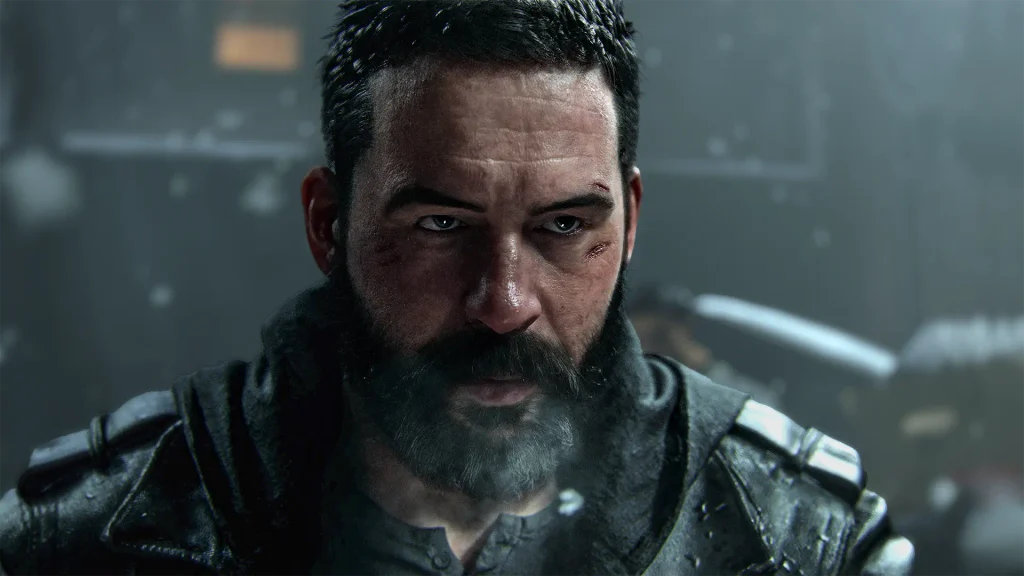
Modern Warfare 4’s campaign runs for approximately eight hours and weaves together two distinct narratives before they collide near the end. One storyline follows Price, who evokes figures like Jason Bourne and Frank Castle as he pursues the remnants of Makarov’s operation alongside unsavory allies. Early in the story, Price chases Makarov through the streets and rooftops of New York City, cornering him in an alley and killing him with his bare hands. Soap’s death has broken something in Price, signaling that he is no longer the same man seen in 2019.
This shift reflects a departure from the 2019 mission “Going Dark,” where Price told Gaz, “You draw the line wherever you need it, Sergeant,” regarding extreme measures like collateral damage. Seven years later, Price has pushed past that line entirely. In his pursuit of Archer, the Russian defense minister, Price allies with Valeria Garza and her cartel. Their manhunt spans messy street battles in Paris and close-quarters chases in Mumbai, where the cartel’s reckless disregard for civilian casualties repeatedly clashes with Price’s efforts to protect bystanders. Price tries to convince himself that he is still acting for the greater good, adopting an ends-justify-the-means mindset.
The other storyline depicts an invasion of South Korea by North Korea. The conflict stems from an internal purge of traitors and a power grab by Ri Ju-Young, the sister of the newly appointed Supreme Leader. Viewing her brother’s comparatively softer side as weak, she takes control of the country and executes a “simple plan” to overrun South Korea.
Russian defense minister Archer stands at the center of this coup, offering Russian backing and framing the invasion as a war to reunite the Korean peninsula. Archer supplies North Korea with an experimental, single-use EMP designed to cripple South Korean infrastructure, electricity, and military communications, using the conflict as a proving ground for a weapon he intends to deploy against American influence across East Asia.
The campaign’s chronological structure unfolds with the invasion set in the present, while Price’s missions depict the days leading up to it, requiring players to piece together how events escalated. Although the reviewer is generally not a fan of back-and-forth storytelling, Infinity Ward handled it without making it feel forced or confusing. The two plotlines play differently: Price’s missions feature personal, grimy encounters with extensive hand-to-hand combat, whereas the Korean missions depict all-out warfare involving tanks, explosions, and city takeovers. The storylines converge near the end, wrapping up the rebooted Modern Warfare saga.
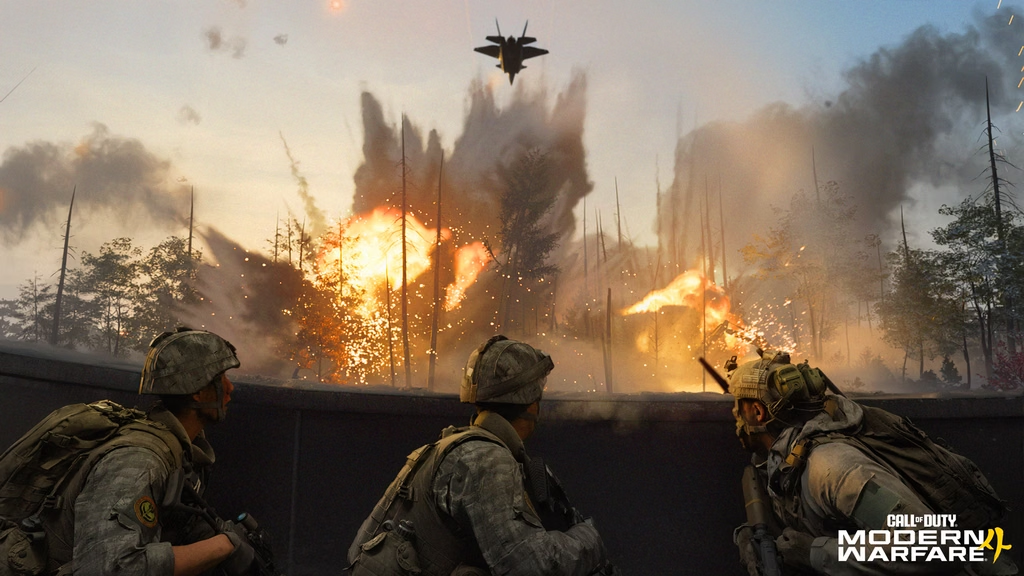
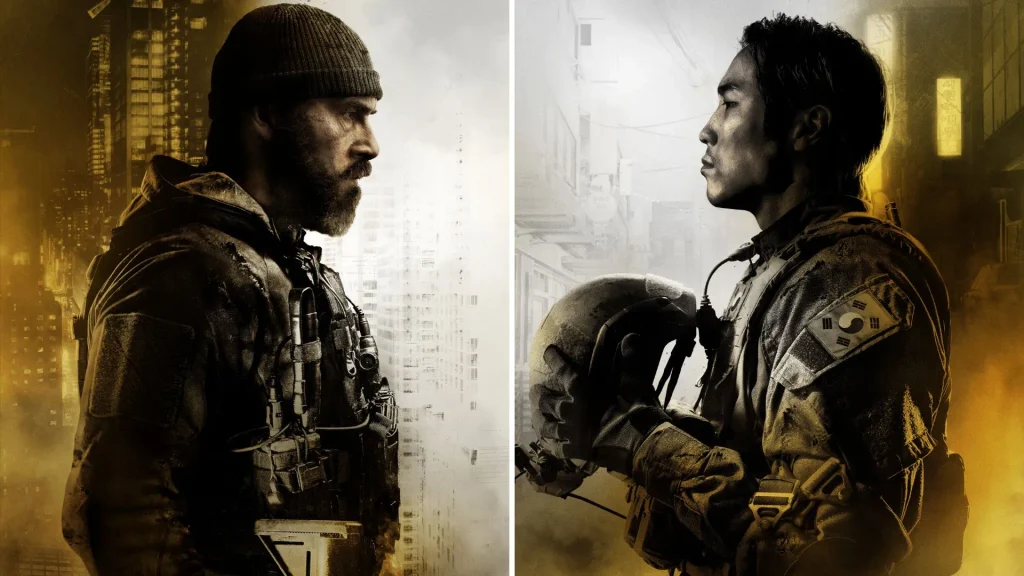
The Korean cast features strong characterization. Park Hyun Jun, serving his mandatory military service when the war reaches his doorstep, simply strives to keep his squad alive. North Korean officer Ko Jin-Hyuk, accustomed to following orders, begins questioning authority after witnessing the brutality of Ri’s regime. In one mission, players control a North Korean infantry soldier whom Ri forces into a deeply unsettling, demonic decision, illustrating why Ko eventually wants her out.
Mads Mikkelsen portrays Archer with a cold, menacing presence, yet the character is criminally underutilized. Archer appears infrequently, and his motivations remain unclear until the end. Much like Mikkelsen’s role as Kaecilius in Doctor Strange, the lack of screen time represents a missed opportunity for an actor of his caliber.
The campaign maintains strong momentum throughout its eight-hour runtime, avoiding filler missions. Environments closely resemble real-world locations, and the graphics stand out. Gunplay features noticeable weight, reminiscent of Warhammer 40,000: Space Marine 2, with screen shake and aim punch enhancing the intensity of firefights.
The standout mission is “Stranded,” an open-world level set behind enemy lines in snowy North Korea, allowing players to scavenge, craft, and tackle three main objectives in any order. The subsequent mission contrasts this slower pace by requiring players to hold their ground while awaiting extraction, switching between squad members to counter ambushes, tanks, and snipers in an encounter that plays like a real-time strategy game.
The campaign has shortcomings. Price’s arc loses focus as the Korean war takes center stage, and the finale lacks emotional impact. One-on-one melee fights function like a simple two-button simulator of blocking and striking. The final confrontation with Archer ends abruptly, falling short of the iconic showdown with Makarov in 2011’s Modern Warfare 3. On PC, performance was demanding; even on a high-end system well above recommended specifications, max graphics ran smoothly only after enabling DLSS and frame generation.
Multiplayer
Infinity Ward removed the omnimovement mechanics introduced in Black Ops 6, replacing them with a more grounded, realistic movement system. Players can only slide in the direction they are facing. While overall speed is reduced compared to recent titles, slides and slide cancels remain fast and responsive, emphasizing deliberate positioning over erratic traversal.
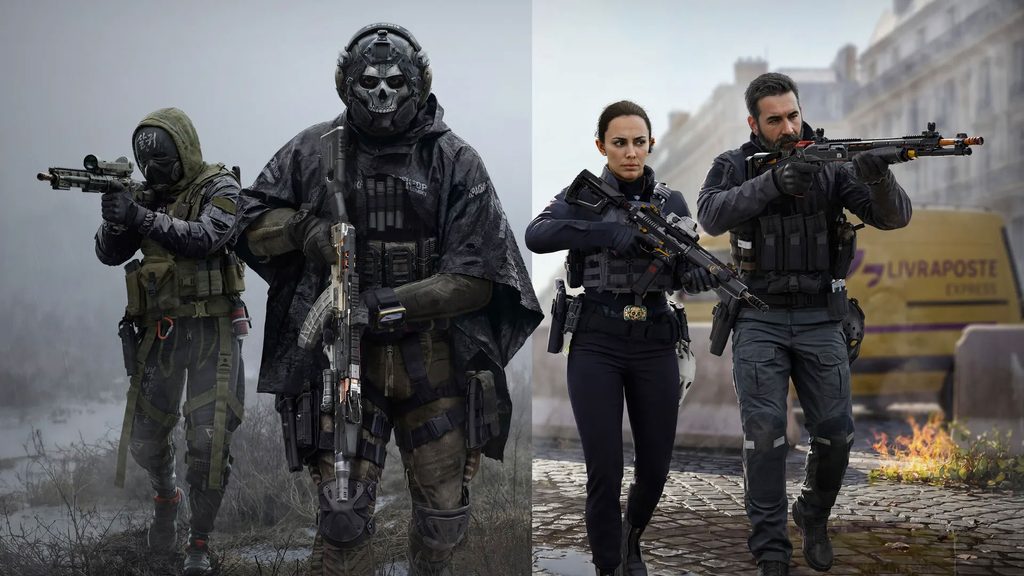
Gunplay mechanics are well-tuned, and weapon recoil animations match gun behavior. Time-to-kill sits in a balanced zone, slower than past Modern Warfare entries but faster than the Black Ops series. However, inconsistent shot registration proved to be a recurring frustration during matches.
Despite community complaints about matchmaking, the reviewer found it reliable, with matches frequently coming down to the wire and final scores remaining close. Skill adjustments occur quickly, creating competitive lobbies that prevent players from easily dominating less experienced opponents.
The game offers 13 six-versus-six maps following the recent addition of Shipment. Most maps are solid, with two notable exceptions: Transit is far too small to be enjoyable, while Nautical feels like a downgraded version of Hijacked that needs additional flanking paths to improve competitive viability.
Infinity Ward added several new multiplayer modes:
- Collateral: A tactical 5v5 mode modeled on Search and Destroy without respawns or custom loadouts. Matches begin with a pistol round, and players purchase equipment using cash earned from kills and bomb plants, evoking Counter-Strike or Valorant.
- Hijack: A mode where teams contest a single Data Spike that can be carried, thrown, or passed, aiming to plant it at the enemy Comm Station and defend it until the upload finishes.
- Inflation: A fast-paced 6v6 respawn mode where kills raise a player’s cash level. Passing a specific monetary threshold reveals the player’s position on radar.
- Kill Block: A modular mode set in a training facility. Outer sections draw from custom environments, while the central section incorporates classic map locations such as Crash, Shoot House, Highrise, and Kill House. With over 500 combinations and weather variations like rain or snow, the mode forces players to adapt.
Weapon progression introduces cross-weapon attachment unlocks, allowing players to level up unused weapons that share attachments with equipped firearms. Maximizing a weapon unlocks its Apex attachment, modifying performance without taking up one of the five attachment slots. Custom loadouts provide three built-in perks alongside killstreaks like the UAV, railgun sentry, and gunship. After roughly 40 hours of multiplayer play, the experience began to feel somewhat repetitive, indicating that Infinity Ward will need ongoing seasonal content to sustain player interest.
DMZ
DMZ is the standout mode in Modern Warfare 4. Set after the campaign, it places up to 60 players in three-person squads into an open-world sandbox to battle rival operators and AI forces.
The sandbox map, Hajin, is set in a demilitarized zone between North and South Korea. It is the largest DMZ map to date, featuring 13 major points of interest and 60 smaller locations with varying threat levels. Dynamic weather impacts visibility and sightlines, while vehicles require refueling and repairs, turning gas stations into crucial pit stops and prime camping grounds for tryhards.
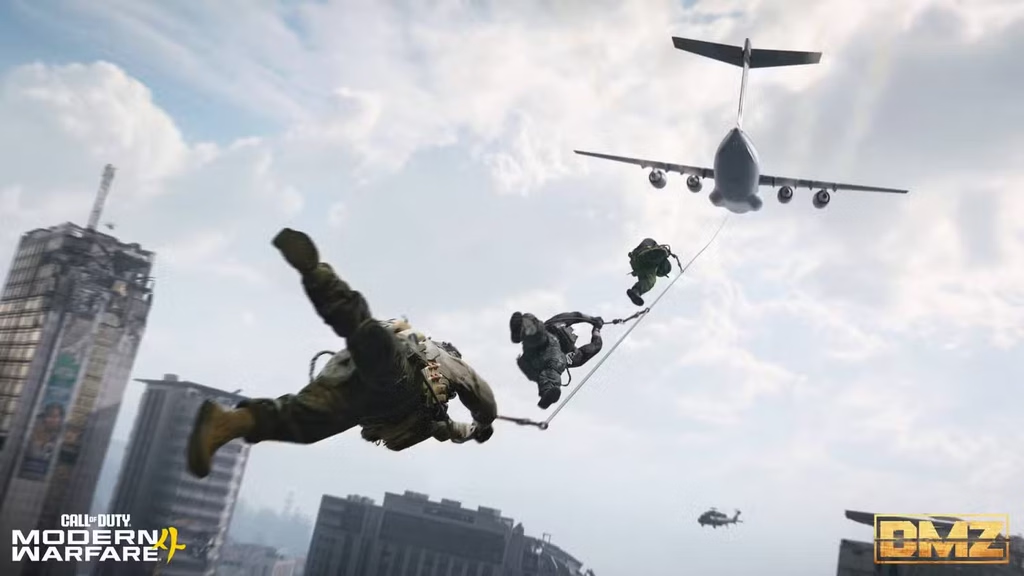
At launch, DMZ includes six story missions. Notable assignments include Operation Silent Ledger, a vault heist at the Heavenly Luck Casino for master printing plates, and Operation Fallen Ember, which involves infiltrating the irradiated Haneul Nuclear Reactor to pull spent fuel rods, secure a nuclear warhead, and escape across the water. Each mission awards 25,000 cash, keys, gear, and vehicles. Players can also undertake Dynamic Ops, multi-stage missions chosen at the FOB or mid-match, which reward a high-tier supply drop upon completion.
Eliminating players increases a player’s heat level, similar to Grand Theft Auto’s wanted system. Higher heat places larger bounties on players, allowing rivals to track them via bounty boards. Players can also use these boards to clear their own bounty or purchase tracking intel on others.
Between deployments, squads assemble at the party leader’s Forward Operating Base (FOB). Leveling up unlocks stations including vendors, a 3D printer, a dog tag case, and a firing range. In-match gear purchases are removed, requiring players to scavenge crafting materials during deployments. DMZ progression remains separate from multiplayer.
Reaching level 10 unlocks the Gunsmith station to craft weapons and customization options using manuals found in Hajin. Attachment slots must be purchased at increasing costs, raising the stakes of losing high-tier weapons upon death. Operators feature three trait trees—Warfighter, Scout, and Survivalist—that level up the longer an operator survives. If an operator dies, they are lost unless the player purchases a rescue team, whose price scales with level.
DMZ’s primary drawback is the absence of a dedicated solo queue. While solo players can disable squad fill, they regularly face coordinated three-player teams communicating via Discord. Random matchmaking via squad fill rarely matches the coordination of pre-made groups.
DMZ is no longer free-to-play, requiring the $70 base game. While this price point feels justified by the expanded content, the $100 Vault Edition includes single-use DMZ upgrades, introducing pay-to-win concerns for players who already paid full price.
Final thoughts
Modern Warfare 4 provides a strong conclusion if it marks the end of the rebooted saga. The campaign significantly surpasses its predecessor, delivering grounded action and compelling drama despite an underused antagonist in Archer and an anticlimactic finale.
Multiplayer establishes solid fundamentals with responsive gunplay, grounded movement, and inventive modes like Kill Block, Collateral, and Inflation, though long-term engagement will depend on regular seasonal updates.
DMZ serves as the centerpiece of the package, offering deep progression and high-stakes tension, even though the lack of solo matchmaking and the presence of Vault Edition perks remain notable issues.
Digital Trends reviewed Call of Duty: Modern Warfare 4 on PC using a copy purchased independently on Steam. Testing was conducted on a system with a ZOTAC GeForce RTX 5070 Ti 16GB, AMD Ryzen 7 9800X3D, and 32GB of DDR5-6000 RAM.
Call of Duty: Modern Warfare 4 is available on PlayStation 5, Xbox Series X/S, Nintendo Switch 2, and PC via Steam, Battle.net, and Xbox on PC. PC hardware requirements follow official Steam specifications.
Editorial Ethics & Disclosure: Our evaluations, reviews, and reporting are conducted independently. Learn more about our editorial ethics and affiliate disclosures.

About Robert Haba
Robert Haba covers technology, hardware architectures, and consumer platforms for Gadgetts.
Related Coverage
 AI
Anker Soundcore Work voice dictation launches through Typeless partnership
Soundcore Work voice dictation is now available through Typeless on Windows, macOS, iOS, and Android. Anker's wearable microphone is available for $159.
 Laptops & PCs
All-in-one desktop PCs: 5 disadvantages to consider before buying
All-in-one PCs offer compact setups, but difficult upgrades, thermal issues, costly repairs, and lower resale values present real disadvantages.
 Laptops & PCs
How to measure your yard with Google Maps using satellite imagery
Use Google Maps' satellite imagery feature to measure your yard for free. Find distance and square footage to plan fences, landscaping, and lot projects.