
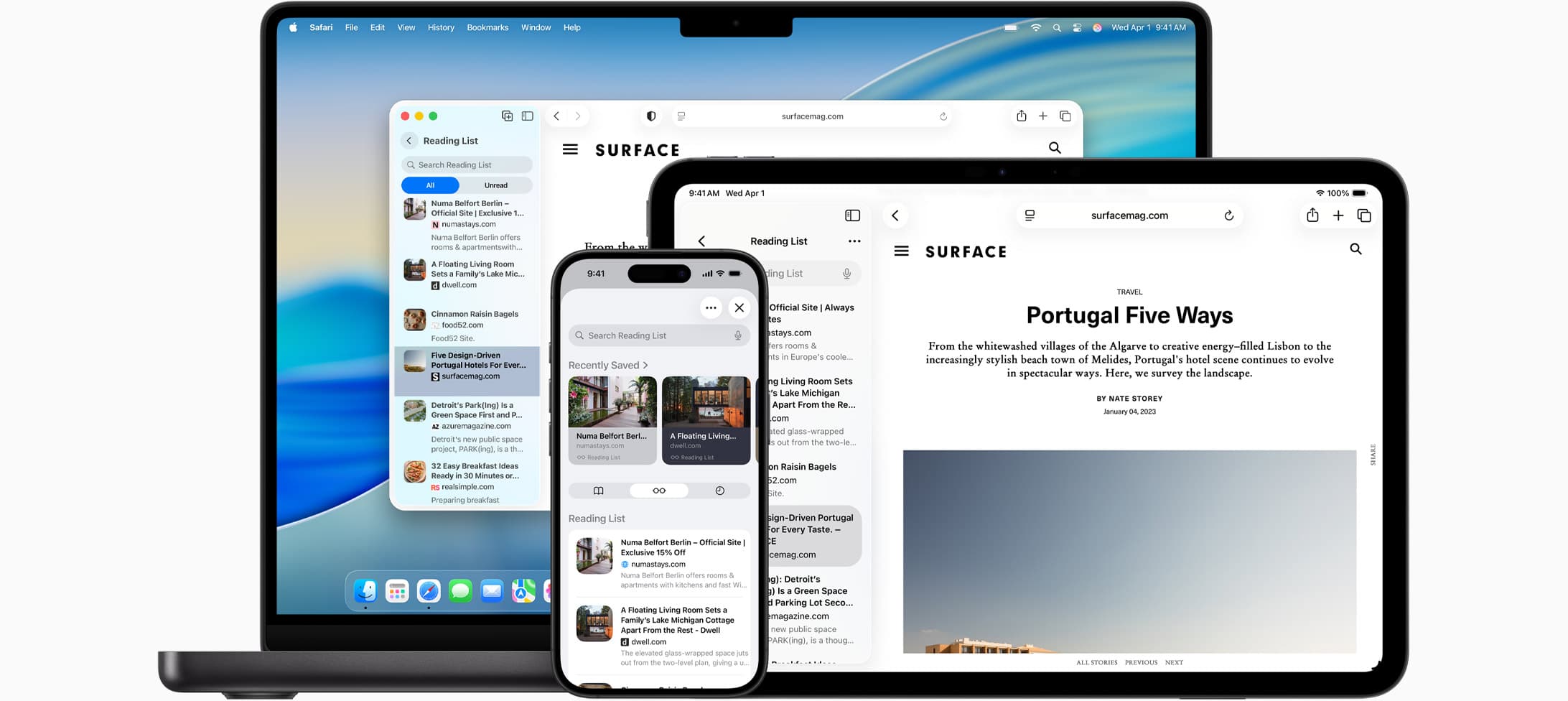
Apple is urging laptop owners to reconsider their default web browser, claiming that Safari battery life can outlast Google Chrome by up to five hours during video playback. The pitch forms the center of Apple’s “Switch to Safari” promotional push, which targets MacBook users running competing software. Statcounter figures place Google Chrome far ahead with roughly 66.36% of the global browser market, while Safari holds second position at 18.27%. Although Chrome dominates desktop and mobile usage, Apple argues that extended runtimes provide a practical reason for laptop owners to switch.
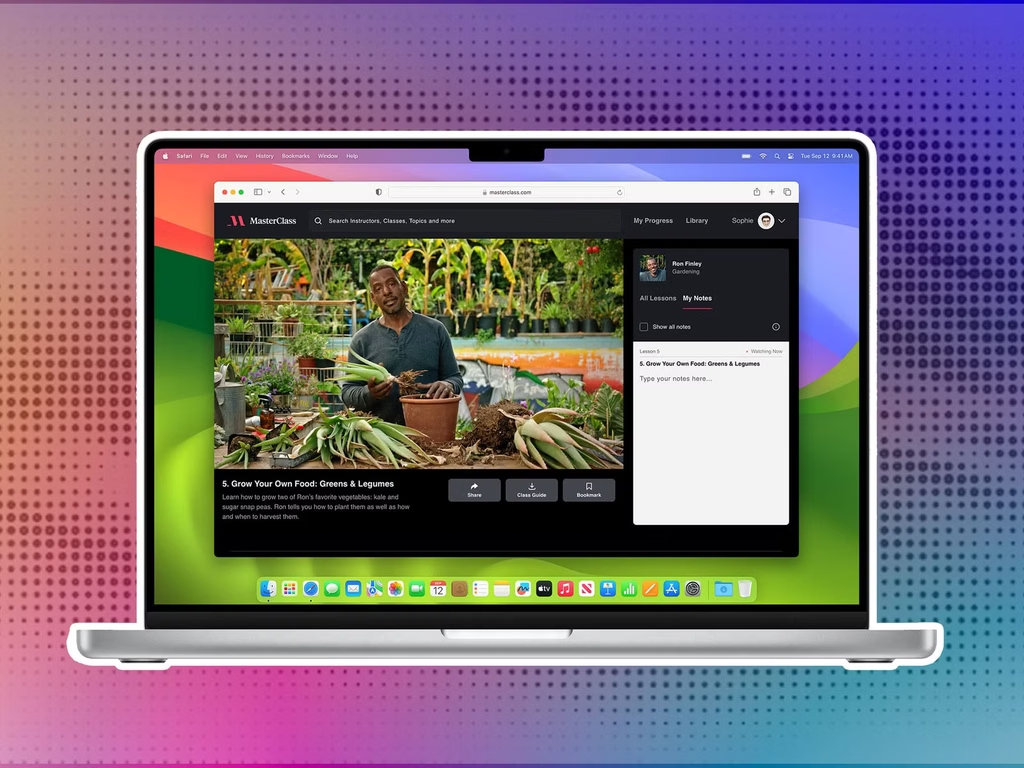
Privacy differences represent another major pillar of the campaign. Google relies on Chrome to gather user activity that supports its targeted advertising operations and ongoing artificial intelligence expansion, including an on-device AI model that installed without widespread user awareness. Safari counters this tracking model by blocking web trackers as a baseline setting, preventing marketing networks from assembling detailed browsing profiles to serve targeted ads. Apple also notes that while Apple Intelligence connects directly into Safari, the architecture protects personal data so information is never shared with Apple or third parties.
Apple test conditions on M5 MacBook Air systems
Apple based its endurance claims on internal benchmarking conducted in August 2026. The evaluation used 15-inch MacBook Air laptops equipped with Apple M5 processors and 16GB of RAM, running macOS 27 (Golden Gate). Testers streamed 1080p video while running on battery power, with panel brightness adjusted to roughly 50%, or eight clicks from the bottom. In that test, Safari version 27.0 delivered up to five hours more playback time on a single battery charge than Google Chrome build 151.0.7922.76. Because Apple designs both macOS and its underlying silicon, its engineers can tune Safari specifically around the power characteristics of Mac hardware.
Alongside battery life claims, Apple published figures showing speed advantages during everyday web browsing. In those tests, Apple reported that Safari loads frequently visited websites up to 35% faster than Google’s alternative. The benchmark measured loading times across 12 popular web destinations under simulated network environments. Apple used identical hardware configurations, operating system builds, and Safari version 27.0, while testing against Chrome version 151.0.7922.138.
Factors keeping Chrome ahead across platforms
Chrome continues to defend its large user base through fast execution and consistent performance gains. In a blog post released in June 2026, Google stated that Chrome reached a score of 469 on JetStream 3, representing a 10% gain. That benchmark measures how quickly a browser runs advanced JavaScript and WebAssembly tasks. Chrome also scored 61 on Speedometer 3.1, a 5% gain on a test that evaluates web app responsiveness.
Distribution plays a substantial role in maintaining Chrome’s popularity among desktop and mobile users. Google’s browser comes preloaded on many Android phones, providing immediate access to a vast mobile audience. It is also available across almost every other major operating system, including Windows, Linux, Mac, iOS, iPadOS, and ChromeOS. Because Safari remains confined to Apple devices, Chrome is expected to remain the dominant browser across desktops and mobile platforms for the foreseeable future.
Cross-device synchronization and software customization provide additional reasons why users stick with Chrome. The browser automatically syncs bookmarks, browsing history, passwords, and installed extensions across different devices. In addition, Chrome has a massive library of extensions that expand what the software can do, with add-ons covering productivity, creative tasks, privacy, and system security. Even with those benefits, Apple’s battery data gives MacBook users a direct reason to weigh their options. For laptop owners who frequently work away from wall chargers, gaining up to five additional hours of video streaming on battery power presents a practical incentive to try Safari.
Editorial Ethics & Disclosure: Our evaluations, reviews, and reporting are conducted independently. Learn more about our editorial ethics and affiliate disclosures.

About Robert Haba
Robert Haba covers technology, hardware architectures, and consumer platforms for Gadgetts.
Related Coverage
 Laptops & PCs
Finding an Intel equivalent to Apple M5 processors
Comparing benchmark scores reveals where an Intel equivalent to Apple M5 silicon exists in laptop chips, while M5 Max and Ultra maintain performance leads.
 Laptops & PCs
How a $10 bootable USB drive can rescue a failing PC
A $10 bootable USB drive can recover an unbootable PC. Learn how to configure Ventoy with Windows or Linux ISO files and portable repair tools.
 Laptops & PCs
Asus TUF Gaming A15 2026 arrives with Ryzen 7 170 and RTX 3050
The Asus TUF Gaming A15 2026 lists for ₹97,990 on Amazon with an AMD Ryzen 7 170 chip, RTX 3050 graphics, 16 GB DDR5 RAM, and a 144 Hz FHD display.